

The Importance of Equipment Management in GMP and GLP Laboratories
 Author: Julian Weber, Digital Lab Consultant
In GMP- and GLP-regulated laboratories, equipment management is a critical compliance process. Every instrument used in the development, testing, or manufacturing of pharmaceutical products must be fully traceable throughout its entire lifecycle. At the centre of this process is the technical logbook.
Traditionally, these logbooks are maintained on paper. While paper-based logbooks have been the industry standard for decades, they create significant long-term challenges when it comes to archiving, compliance, and operational efficiency.
What Is a Technical Logbook?
A Comprehensive Record of Equipment Lifecycle
A technical logbook is a regulated document that captures the complete lifecycle of laboratory equipment. It includes:
• Installation and commissioning
• Qualification and validation activities
• Maintenance and calibration records
• Repairs, deviations, and incidents
• Changes, upgrades, and decommissioning
Ensuring Compliance with GMP and GLP Standards
To meet regulatory requirements, the data recorded in logbooks must be complete, accurate, attributable, and retained for the required retention period.
The Challenges of Paper-Based Logbooks
Hidden Costs and Risks of Paper Documentation
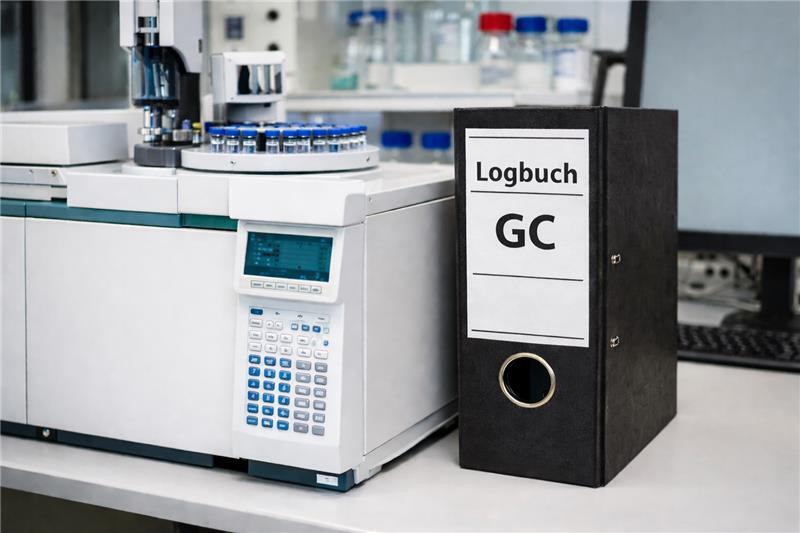
In many laboratories, equipment is still managed using paper logbooks stored next to the instrument. While this may seem simple at first, it introduces multiple hidden costs and risks over time.
Paper logbooks are considered GxP-relevant documentation and must therefore be archived just like batch records, analytical results, or validation documents. In practice, this means:
• Logbooks must be stored for 10, 15, or even 20+ years
• They must be protected from loss, damage, or unauthorized changes
• They must be retrievable at any time for audits or inspections
Laboratory systems are often in use for decades. During this time, it is very common that one paper logbook is not sufficient for the entire equipment lifecycle. As a result, multiple logbooks are created for a single instrument.
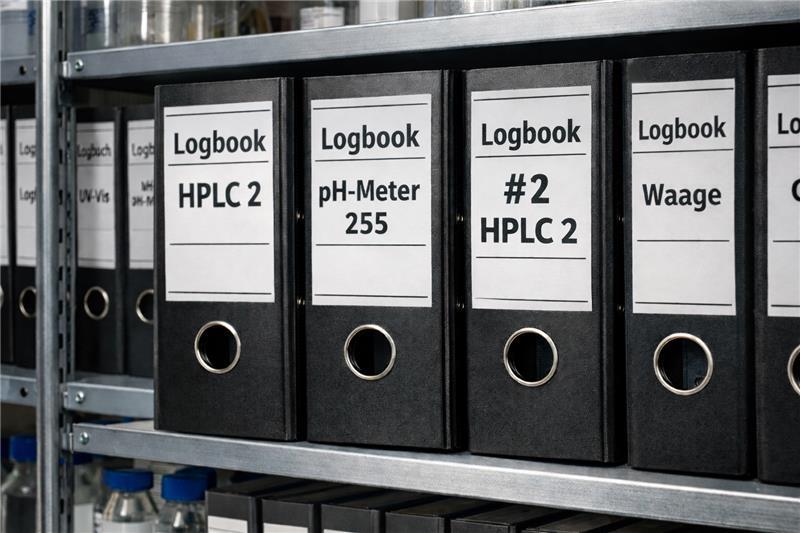
In a laboratory with 100 pieces of equipment, this can easily result in 100 to 400 physical logbooks that must be archived. Each of these logbooks requires space, handling, indexing, and long-term storage - usually in a physical archive.
From an archiving perspective, this leads to:
• Increasing archive volumes
• Rising storage and administration costs
• Slow and inefficient audit preparation
• Higher compliance risk due to damaged or missing documents
Why Paper Logbooks Are an Archiving Problem
Limitations of Paper-Based Systems
Paper logbooks were never designed for long-term compliant archiving. Physical archives consume space, require manual processes, and scale poorly as laboratories grow.
Additionally, paper logbooks are:
• Not searchable
• Difficult to integrate with digital systems
• Prone to wear, loss, or illegibility
• Expensive to manage over extended retention periods
The High Cost of Compliance
While paper logbooks can maintain compliance, they do so at a significant operational cost, making them an inefficient solution for modern laboratories.
The Power of Digital Logbooks
A Structured, Compliant Alternative
Digital logbooks replace paper-based documentation with an electronic format that is:
• Searchable and structured
• Consistently documented
• Access-controlled and traceable
• Ready for long-term digital archiving
Seamless Integration with Laboratory IT Systems
Digital logbooks integrate seamlessly into modern laboratory IT landscapes, enabling standardized processes and improved data integrity.
Digital Logbooks and Digital Archiving: A Perfect Match
Combining Digital Logbooks with GMP-Compliant Archiving Solutions
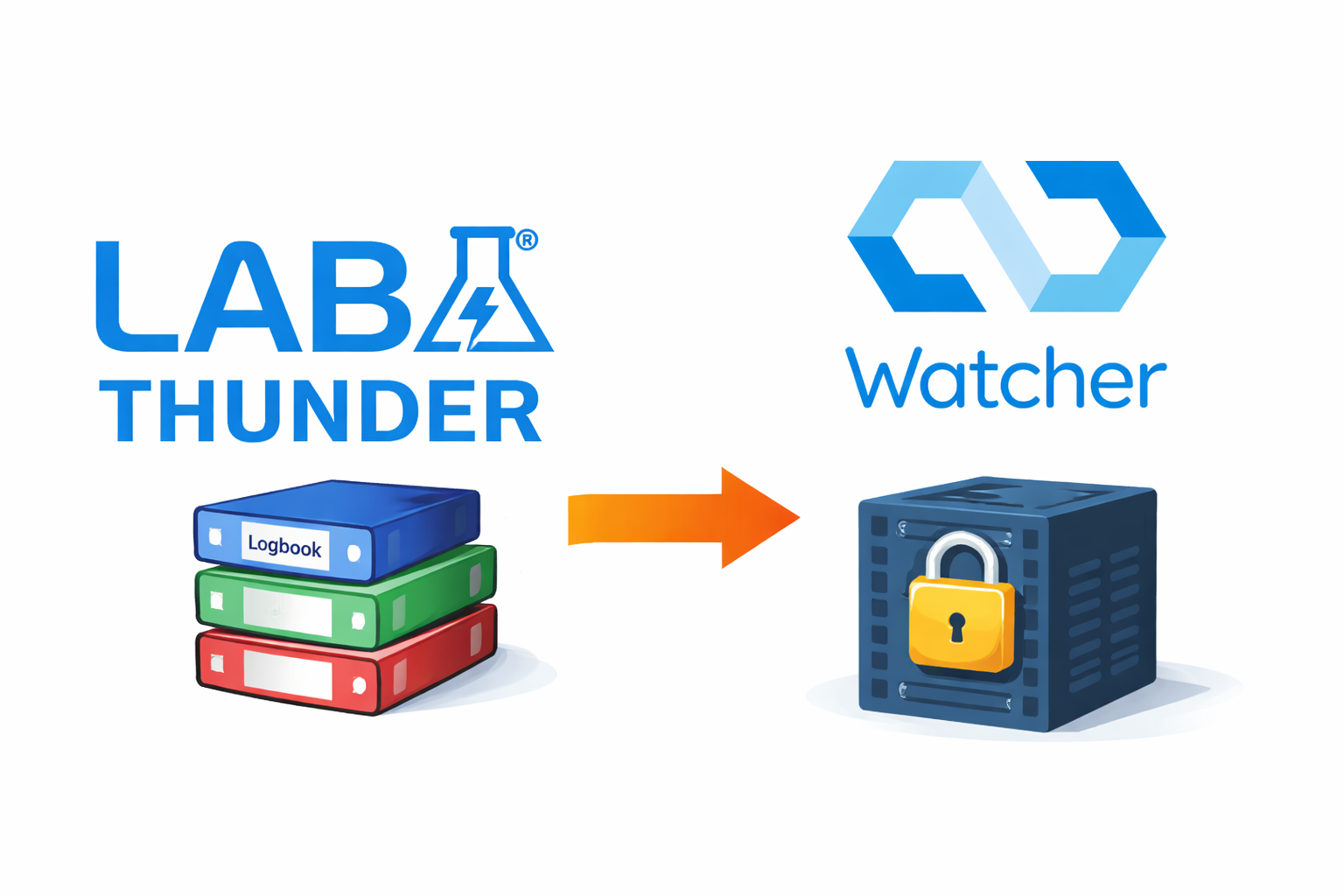
The real efficiency gain comes from combining a digital logbook system - such as LabThunder - with a GMP-compliant digital archiving solution like the Watcher Archive from biomedion.
By design, digital logbooks are archivable from day one.
When equipment reaches the end of its lifecycle, the complete digital logbook can be transferred seamlessly into the digital archive. This process is fast, controlled, and fully compliant.
Benefits of Digital Archiving
Once archived, digital logbooks are:
• Protected against modification
• Instantly accessible for audits
• Managed according to GMP and GLP retention requirements
Business and Compliance Benefits
Measurable Advantages of Digital Logbooks
Digital logbooks deliver significant benefits for laboratories and archive providers, including:
• Reduced archive volumes and physical storage costs
• Faster audits through instant access and search
• Lower compliance risk through controlled lifecycle management
• Future-proof documentation independent of system lifetimes
Instead of managing growing paper archives, companies gain a scalable, compliant, and cost-efficient digital archiving strategy.
Conclusion: From Logbooks to Long-Term Value
The Logical Next Step for Modern Laboratories
Digital logbooks are more than just a replacement for paper- they are a transformative tool for GMP and GLP archiving strategies. By eliminating physical archive burdens and enabling scalable, compliant, and cost-efficient documentation, digital logbooks are a key enabler of sustainable laboratory operations.
Embrace the future of laboratory management with digital logbooks and compliant digital archiving solutions like the Watcher Archive from biomedion. Transform your equipment documentation into a long-term, accessible, and audit-ready asset.